
A foreign anguish

In the last month I’ve been reading a fair bit of poetry, which is new, since I rarely read poetry, which is odd, since somehow poetry is one of the genres that most naturally come to me lately when putting words to the thoughts, to the feelings and the voices, when bringing the energy of my practice into language.
The first poems came via the readings for the On Black Study seminar led by Ishy Pryce-Parchment I was part of in Madrid.
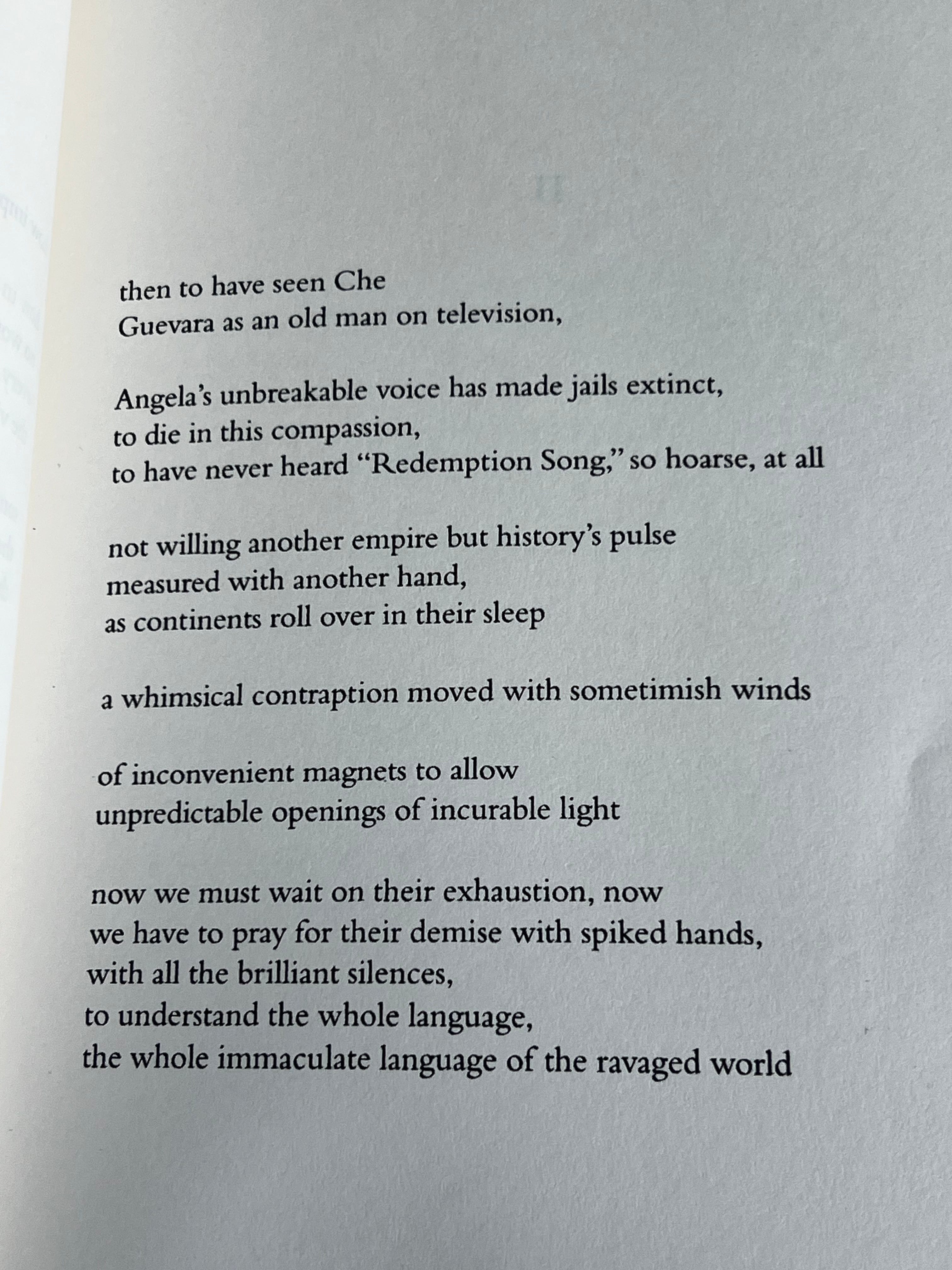
We read Dionne Brand
From Inventory
I was recommended to read NourbeSe Philip
From She Tries Her Tongue, Her Silence Softly Breaks
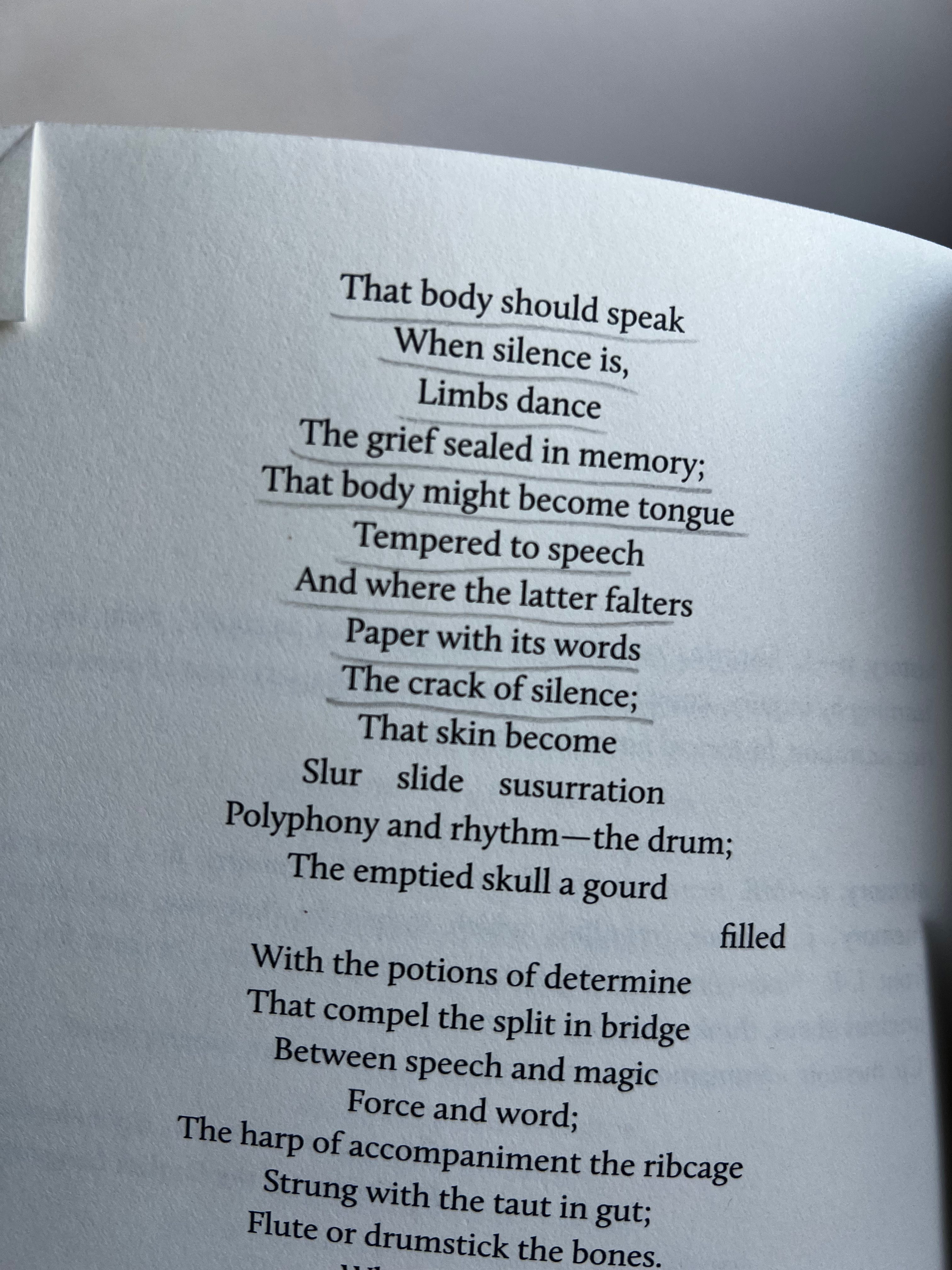
I was particularly touched and impacted by NourbeSe Philip’s poems on language, racism and the painful process of understanding and shaping her experiences using a language - English - that was never hers as a Caribbean woman in Canada.
English
is my mother tongue.
A mother tongue is not
not a foreign lan lan lang
language
l/anguish
anguish
—a foreign anguish.
She writes on Discourse on the Logic of Language. A poem she dissects on this interview on the Commonplace Podcast. (Thank you, Nina! ♥︎) Head to minute 39:54 to be swept away by the softness of her voice as she gives rhythm to her words.
I have a million thoughts on using English as a non-native English speaker to make sense of one’s (ours, my) existence. Last week, I run a workshop at the V&A East on writing. A first for me. I used to teach pottery a lot for many years, which made me develop a profound rejection of teaching. So for this special event, I chose not to teach, but simply to share my relationship to words and create a space for others to join me. After an introductory talk about my practice, different participants at different times asked me if I write in Spanish, which I don’t do and even worse - some would think -, I find quite challenging. It may sound odd it being my mother tongue, but at the end of the day I live in England, my life is in English, I mostly consume culture in English and I mostly read in English. My identity has been shaped here, in the UK, in English. I became aware of my black womanhood reading Angela Davis about a decade ago and since then, it’s been through the black British experience that I’ve made sense of mine. Travelling and sharing in English while travelling.
“In the vortex of New World slavery, the African forged new and different words, developed strategies to impress her experience on the language. The formal standard language was subverted, turned upside down, inside out, and even sometimes erased. (…) Most of these ‘techniques’ are rooted in African languages; their collective impact on the English language would result in the latter being, at times, unrecognizable as English. Bad English. Broken English. Patois. Dialect. These words are for the most part negative descriptions of the linguistic result of the African attempting to leave her impress on the language”.
More NourbeSe Philip on TheAbsenseofWritingorHowIAlmostBecaseaSpy
While my connection to English has little to do with that of the Africans NourbeSe Philip is referring to, I cannot help but make connections to my use of it, for it surely is a tad demonic, broken, bad. I keep learning and improving (I hope!), but reading NorbeSe Philip’s reflections has validated my faulty use of English as the main channel to express myself and connect; to add depth to my practice.
On some book somewhere on my bookshelf, Ursula K. Le Guin invites us to invent words. Something that, despite no longer remembering where or when I read it, got stuck in my head. And then I read these words by none other than Elif Shafak:
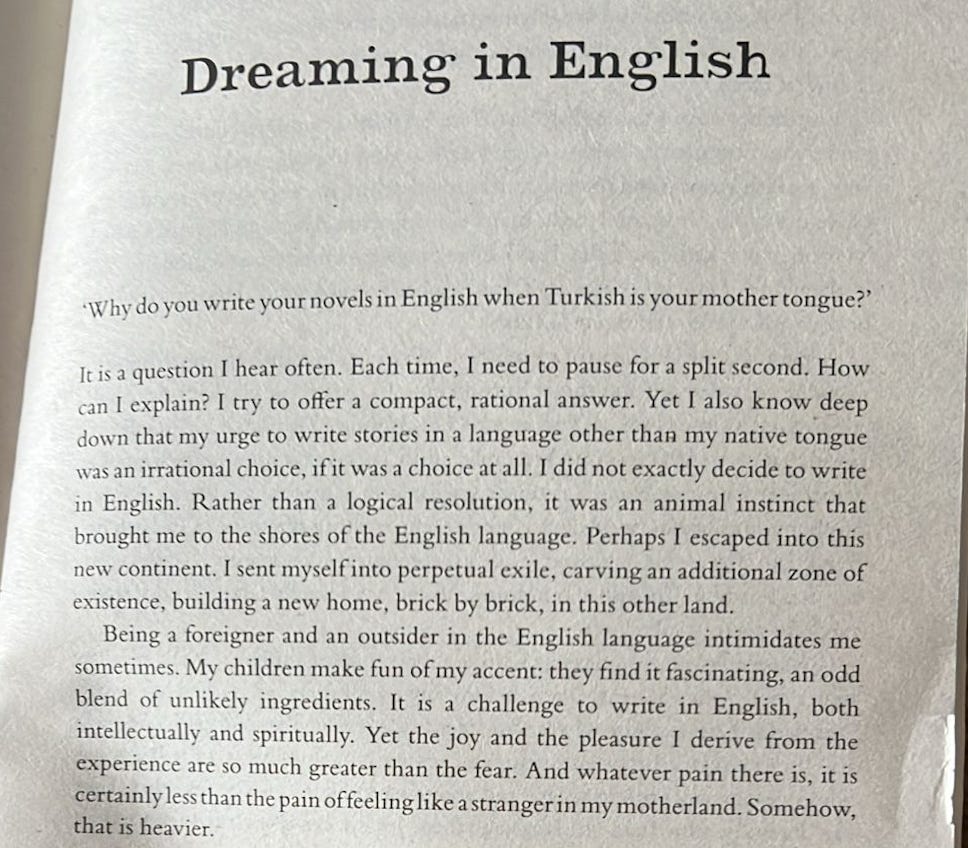
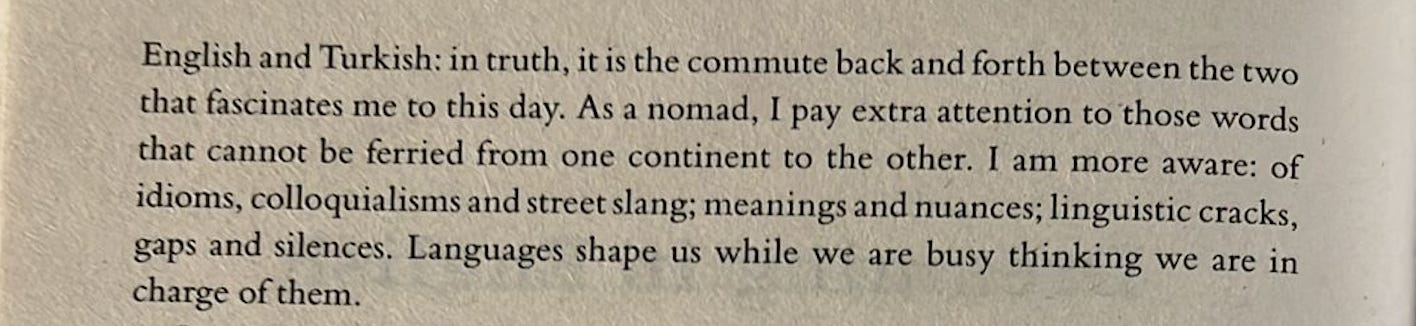
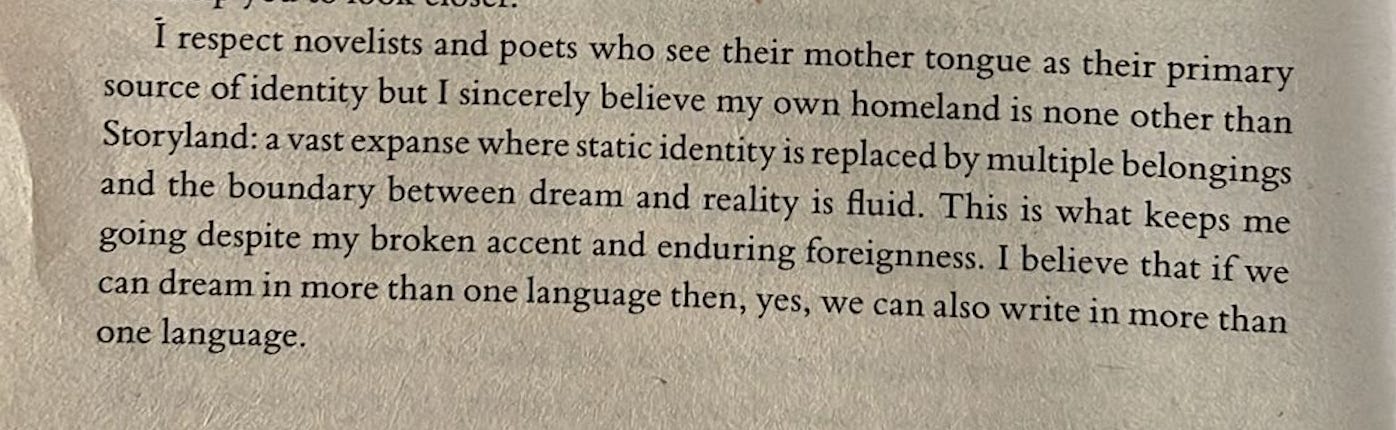
So I wonder - is poetry my preferred genre sometimes as it gives me an added freedom to the freedom I already feel writing in English thanks to the distance I feel both consciously and unconsciously? I don’t know, but it might make sense. Some people argue that doing therapy in a foreign language, in a foreign country, can allow us to access spaces and dark corners we would not dare go to or even realise they exist in our mother tongues. And art, after all, is therapy.


Some pics from the workshop at the V&A East last week ♥︎
Thanks for reading!
Bisila x