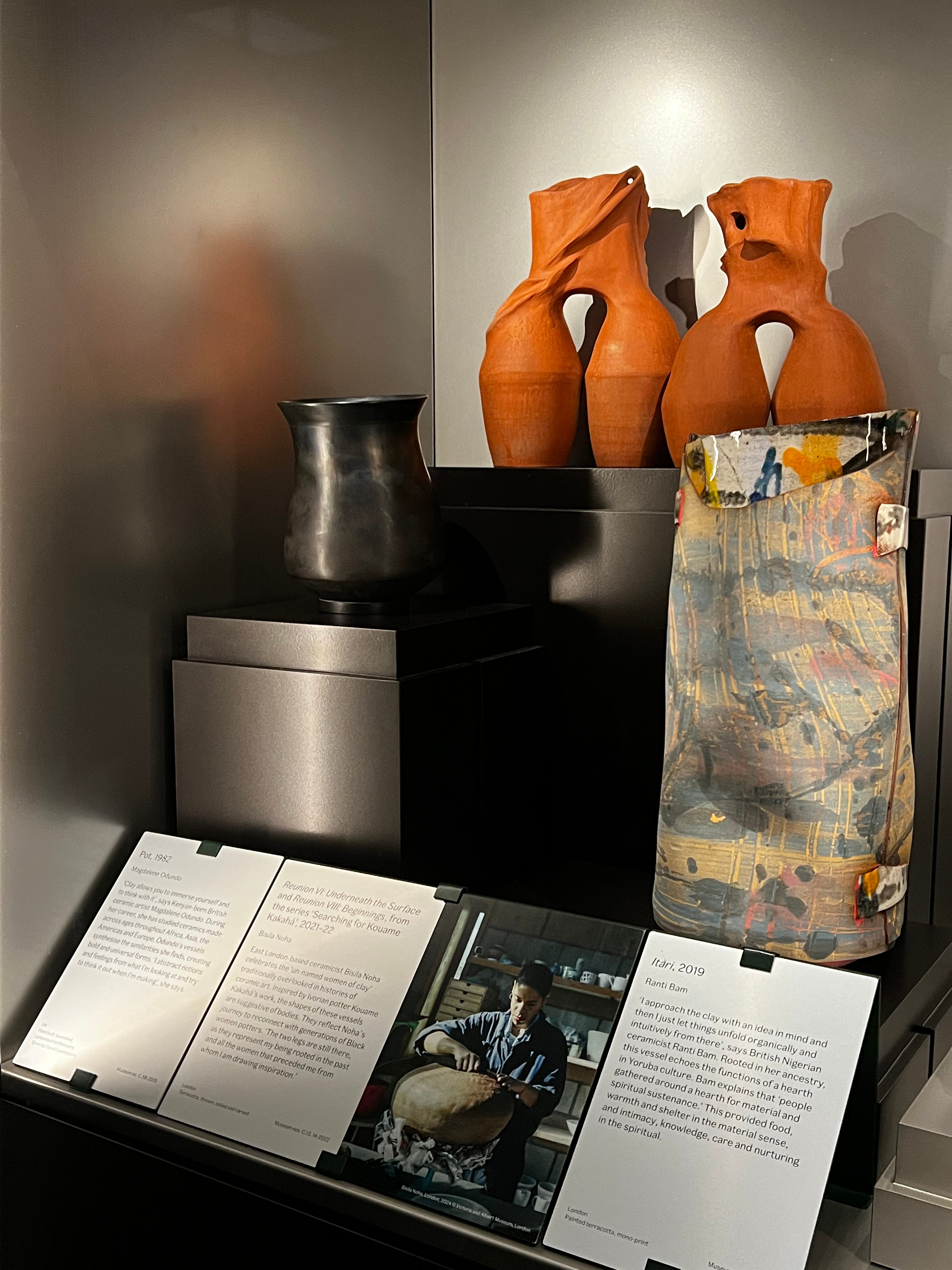
Naming the unnamed

There’s a whirlpool
and then there’s life
A moment of pause
to pause not
a never-ending pull a never-letting-go force
the horse
There’s a whirlpool
or is this life
all joy all heart all excitement
I am ready I am so ready to lie down
*
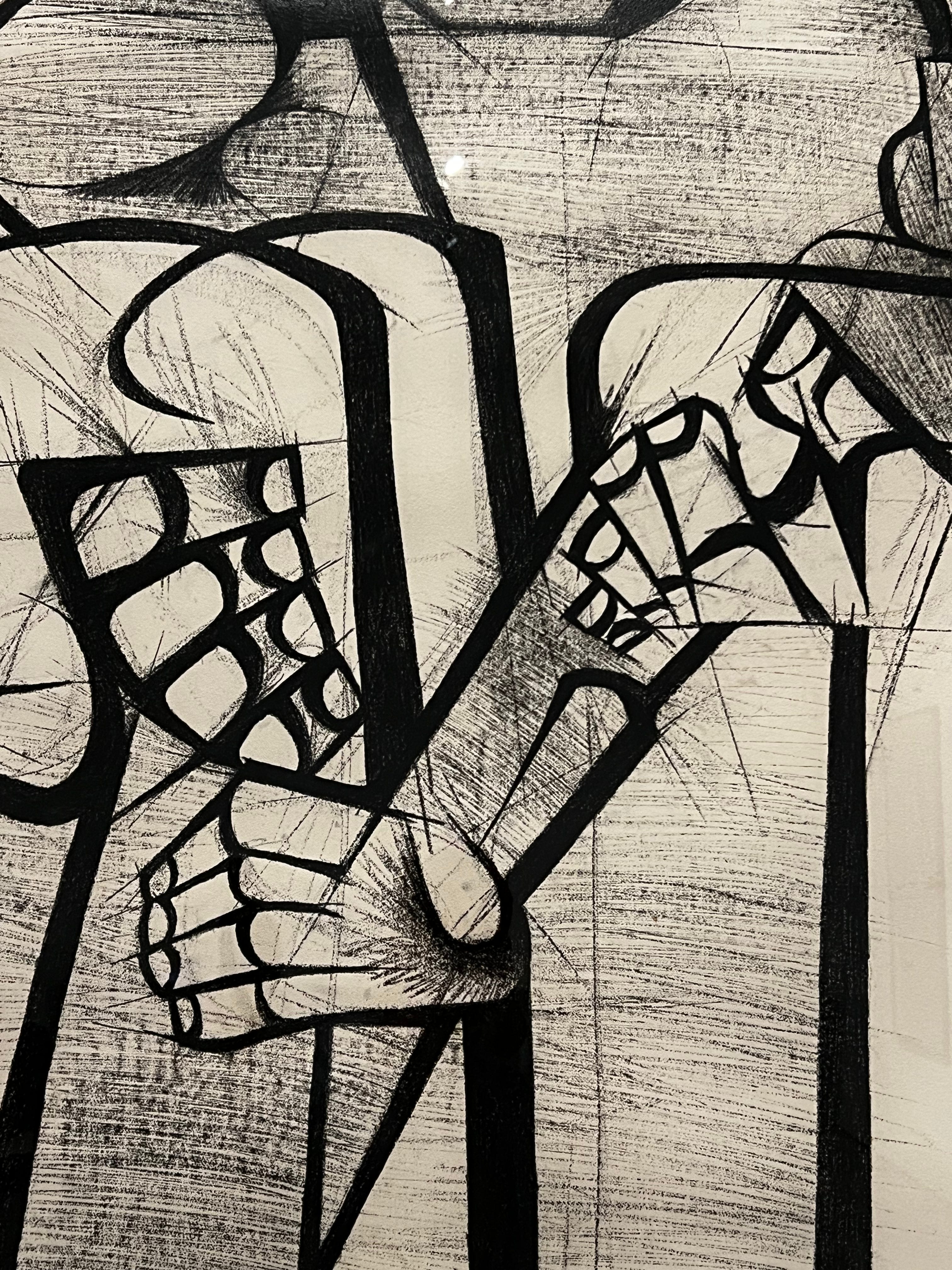
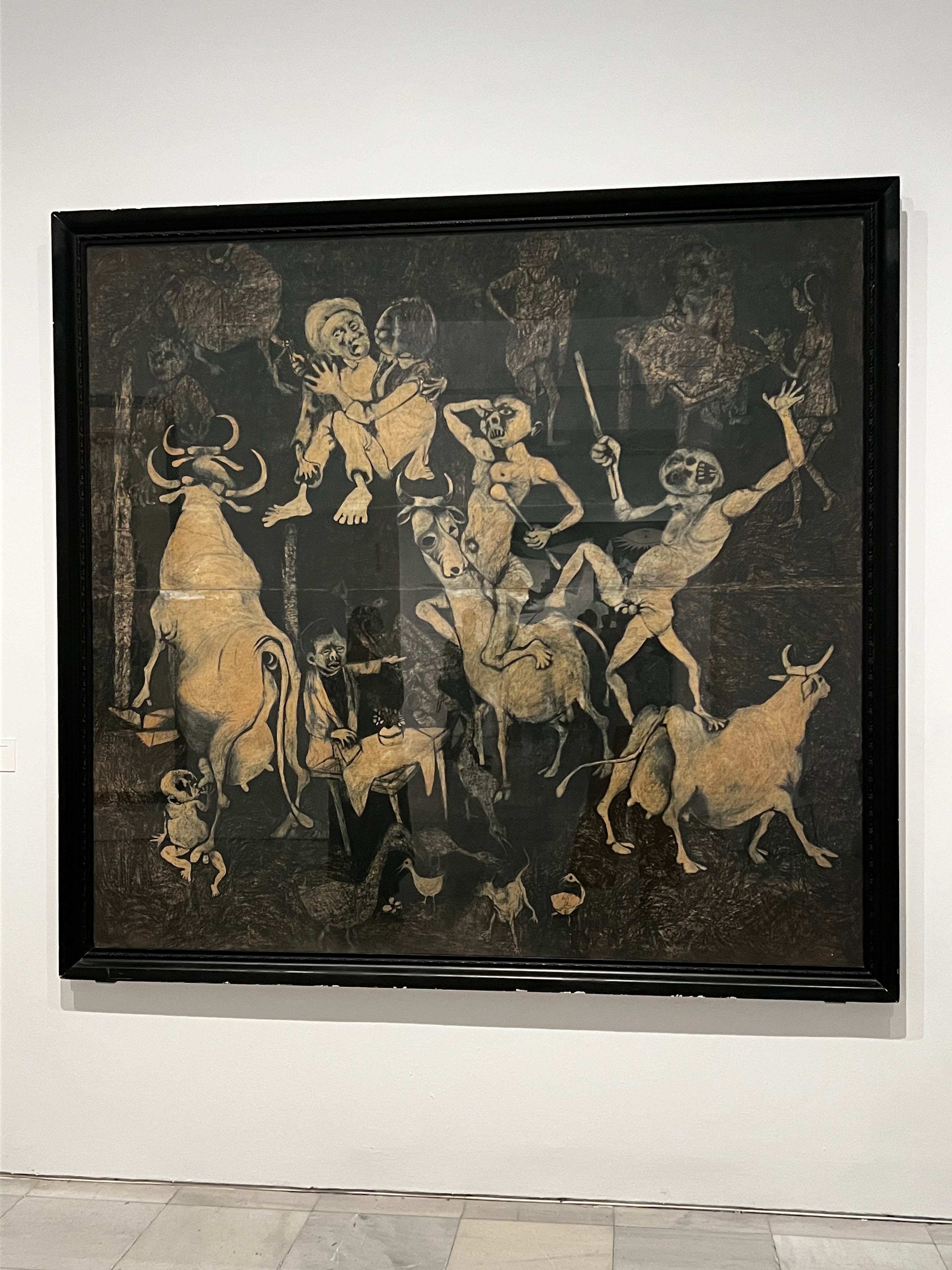
A close up from Dumile Femi’s Hector Pieterson (1987) currently on display at Reina Sofia museum in Madrid. That artwork is a like a secondary act, the main one being the African Guernica, which was painted by Femi twenty years prior in 1967.
After a very comical series of scenes that saw us entering the museum, leaving it to drop the bags in the cloakroom across the patio, the security woman asking me to gift her my pound coin as ‘you don’t need it’ said she ‘but I don’t live here so I do need it’ said I, entering the museum, leaving it for one to smoke while another one went to get our tickets across the patio, entering the museum for a third and last time and up the stairs, still getting acquainted with each other, new friends, to the second floor walking past artworks I had seen before but they had not following the steps of the one who fetched the tickets, a seeming leader, a father, a community organiser in action, who jokingly replied ‘I can smell where they are’ when I asked why he was so certain of his steps across the rooms of a museum he was not familiar with, albeit he knew he smelt it indeed and we arrived. On one side, El Guernica. On the other, the African one.
If we begin with Michel Foucault as our primary methodological and theoretical frame — if Foucault is our referential scaffolding— we will, most certainly, draw Foucauldian conclusions writes Katherine McKittrick on Dear Science and Other Stories. She reflects upon ‘referencing, sourcing, and crediting’ as a way to take us outside of ourselves in the process of thinking or creating knowledge. Going outside of ourselves as in unhinging ourselves, unknowing ourselves, to open ‘up a different conversation about why we do what we do, here, in this place, that despises us’, to create, together, in community, collectively, ‘unexpected intellectual conversations’.
And still, displacing the self, unknowing who we are, is awful: it is indeterminate and unpredictable and lonely.
Amen, sister.
So there I was in front to Femi’s artwork, analysing it to find the similarities to the artwork, turning around to revisit a painting I must have seen a million times, El Guernica. So there I was going through the lines on the curatorial text I had just read the one introducing the display where it said that it is unknown who gave Femi’s piece the title. Was it him? Was it the gallery? We don’t know, but as far as the curator was concerned, Femi had not rejected it and so are we encountering it as it is shown outside of South Africa for the first time ever. Has it been noticed because of the title? Because of the reference to the artwork? Is that how we the West can understand it, connect to it, appreciate it? And my mind kept going back to McKittrick. She says:
Sara Ahmed makes the very smart observation that citation practices are gendered and racialized. Citation decisions are a political project for Ahmed because, she argues, absenting white men (from our bibliographies, references, footnotes) reorganizes our feminist knowledge worlds. By excluding white men from her (our) bibliographies she (we) can generate new ideas and chip away at, and possibly break down, the walls of patriarchy that have excluded and refuse feminist ways of knowing. Decentering the citations, and thus the experiences, of white men unmakes a scholarly system that champions and normalizes white patriarchal scholarly traditions.
Amen, sister.
I have no issue with Femi. I found it funny or interesting or good food for thought how some of the theories or conversations I had just been part of during a three-day symposium on Black Study at Reina Sofia - how we collectively shared thoughts on how we, artists and cultural workers, could find alternatives to the post-colonial Western patriarchal system of believes and ways of thinking that has been imposed on us - were being at play displayed at the very museum that had held all that thinking just until then.
Since 2016 I have read about five books by men and sometimes I am told ‘how much I am missing’ by removing men from my intellectual nourishment and oh I don’t care. How much the world has been missing by removing women, queer people and people of colour from the intellectual nourishment of our societies for far too long. I wonder. If I want to think differently to dream of a different world I cannot read white men or else I will end up thinking like them. What do you say?
what we tell each other about what we know and how to know, contain how to refuse practices of dehumanization.
She said.
Naming demands that we ask about the unnamed and honor the unnameable.
And what do we say?
Amen, sister.
And the wheels kept turning…
After my solo show I took a break I got ill on my birthday I climbed a couple of mountains in the French Pyrenees ate a lot of cheese and some pastries; took what felt like a million trains across Spain and France to the UK to then fly back to Spain and four days later come back home, the one in London. In the meantime the V&A East opened with two of my works on display. In the meantime, a very dear friend opened her solo show in London - if you are local do not miss it! In the meantime, I got a new sofa at home, the one in London, from which I am writing so perhaps the wheels will slow dow in May.